The term “lit slang meaning” is commonly searched by people who come across the word “lit” in social media posts, text messages, music, or everyday conversations. As online communication continues to evolve, slang words often gain new meanings that differ from their original definitions. “Lit” is one of the most popular examples of a word that has transformed through internet culture and modern entertainment.
Today, “lit” is mainly used to describe something exciting, impressive, enjoyable, or full of energy. People use it to express excitement about events, experiences, fashion, music, and viral trends. However, the word has an older meaning connected to light and illumination, which can sometimes create confusion.
Understanding the context behind “lit” is important because the meaning changes depending on where it is used. This article explores the definition, history, online usage, technical meanings, common misunderstandings, and similar expressions related to this popular slang term.
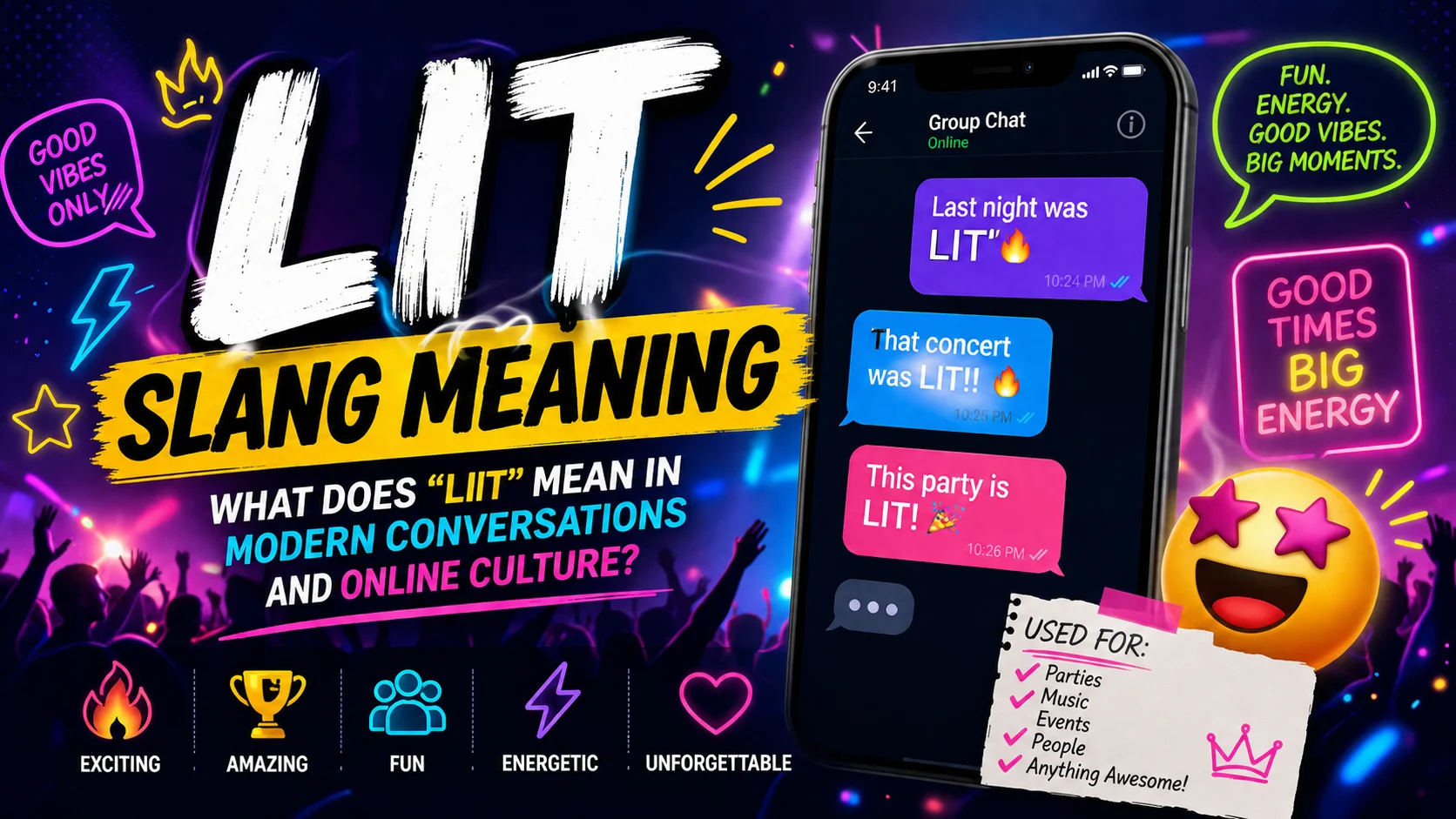
In modern slang, “lit” means exciting, amazing, fun, or impressive. It is usually used as a positive expression to show that something is highly enjoyable or creates a strong emotional reaction.
For example:
- “The party was lit.”
This means the party was energetic, exciting, and enjoyable. - “That song is lit.”
This means the song is impressive, catchy, or entertaining. - “Your new shoes are lit.”
This means the shoes look stylish or excellent.
The slang use of “lit” is different from its traditional English meaning. In standard English, “lit” is the past tense of “light,” meaning something was illuminated or set on fire. For example, “The room was lit by candles” refers to brightness, not excitement.
The slang version developed as a way for people to describe moments that feel lively or memorable. It can refer to:
- Events and celebrations
- Music and entertainment
- Fashion and personal style
- Online content
- Social experiences
Unlike formal vocabulary, slang depends heavily on culture and community. A teenager using “lit” on TikTok may mean “awesome,” while a writer describing a candle may use it in the traditional sense.
The word has become popular because it communicates a strong reaction in a short and simple way. Instead of saying something was “extremely enjoyable and exciting,” people can simply say it was “lit.”
Background and Origin of the Word Lit
The history of “lit” shows how language can change over time. Originally, “lit” came from the verb “light,” and for many years it was used only as the past tense of that word. Traditional examples include “a lit candle” or “a lit room.”
The slang meaning developed later through cultural influences, especially music and entertainment. The term became widely associated with energetic parties, exciting experiences, and moments of celebration. Hip-hop culture played an important role in spreading the expression, with artists using “lit” to describe high-energy environments.
As social media platforms grew, slang terms began spreading faster than ever. Websites and apps focused on short-form content helped make “lit” a common part of online language. Users began adding it to captions, comments, memes, and messages.
Several factors contributed to its popularity:
- The growth of digital communication
- Influence from music and pop culture
- The need for short, expressive words online
- Viral trends on social platforms
Over time, “lit” moved beyond describing parties. People started using it for anything impressive or exciting, including sports moments, creative work, travel experiences, and personal achievements.
Although newer slang terms have appeared, “lit” remains widely recognized because it was one of the words that helped shape modern internet language. It demonstrates how everyday words can gain new meanings through repeated use within communities.
Usage in Different Contexts (Chat, Social Media, Professional Fields)
The meaning and usefulness of “lit” depend on the environment where it appears. In casual conversations, it is a common expression of excitement. In professional communication, it is usually avoided because slang may reduce clarity or appear too informal.
In personal chats, people often use “lit” to describe enjoyable experiences:
“Yesterday’s event was lit.”
This means the event was memorable and entertaining.
On social media, “lit” is frequently used in captions and comments. Users may describe:
- Concerts
- Sports performances
- Fashion choices
- New releases
- Travel experiences
- Viral videos
For example, someone commenting “This video is lit” is saying that the content is exciting or impressive.
In marketing and entertainment, brands sometimes use slang like “lit” when targeting younger audiences. A music festival, clothing brand, or online campaign may use the word to create a modern and energetic image.
However, professional environments generally require more formal language. A business report, academic paper, or official email would usually replace “lit” with words such as “excellent,” “successful,” or “impressive.”
The difference between casual and professional usage highlights an important aspect of slang: it depends on the audience. A word that sounds natural among friends may not be suitable in every situation.
Meaning in Chat, WhatsApp, Instagram, and TikTok
On messaging platforms and social media, “lit” is mostly used as an expression of approval or excitement.
In WhatsApp conversations, someone might write:
“Last night was lit!”
This means they had a great time and enjoyed the experience.
On Instagram, users often use the word in comments:
“Your photos are lit.”
This means the photos look creative, attractive, or impressive.
On TikTok, “lit” appears frequently in reactions to:
- Dance videos
- Music trends
- Challenges
- Funny clips
- Viral content
A comment such as “This trend is lit” means the trend is exciting or entertaining.
The popularity of “lit” on social media comes from its simplicity. Online conversations often favor short words that quickly communicate emotions. Slang allows users to express enthusiasm without writing long explanations.
It also creates a sense of belonging. People who understand the slang feel connected through shared online culture.
However, slang changes over time. Some younger users may prefer newer expressions, while others continue using “lit” because it remains widely understood.
Meaning in Physics, Medical, and Aircraft Terminology
Although “lit” is mostly recognized as slang today, it can appear in technical fields with different meanings.
In physics and scientific writing, “lit” may appear as an abbreviation or shortened term in specific research contexts. Its meaning depends on the subject area and the document where it appears.
In medical terminology, “LIT” may be used as an abbreviation in certain healthcare settings. Medical abbreviations are often specific to particular organizations, so professionals must rely on official definitions and surrounding information.
In aircraft and aviation terminology, “LIT” may refer to specialized technical terms or abbreviations. Aviation uses many shortened forms to make communication efficient and precise.
These meanings are separate from internet slang. If someone says “That movie was lit,” they are almost certainly using the slang definition. If the term appears in a scientific or technical document, the meaning must be interpreted from context.
This difference shows why context is essential when understanding words that have multiple uses.
Common Misconceptions
One common misconception is that “lit” is only a modern internet invention. In reality, the word has existed in English for centuries as the past tense of “light.”
Another misunderstanding is that “lit” always means something related to brightness or fire. While that is its original meaning, slang usage focuses on excitement and enjoyment.
Some people also believe “lit” only applies to parties. In modern slang, it can describe almost anything impressive, including music, clothing, games, performances, and experiences.
Another mistake is using slang in situations where formal language is expected. Although “lit” is widely understood online, it may not fit professional or academic communication.
Similar Terms & Alternatives
Several slang words have meanings similar to “lit.” These include:
Fire – Used for something extremely good, impressive, or high quality.
Dope – Describes something stylish, cool, or impressive.
Hype – Refers to excitement or anticipation around something.
Epic – Describes something memorable or extraordinary.
Awesome – A general term for something very good.
While these words overlap, “lit” often focuses on energy and excitement, especially in social situations.
How to Respond to It
The best response to “lit” depends on how it is used.
If someone says:
“Your performance was lit.”
They are giving a compliment. A natural response could be:
- “Thanks, I appreciate it!”
- “Glad you enjoyed it.”
- “It was a lot of fun.”
If someone describes an event as lit, they are usually sharing excitement rather than asking a question.
If you do not understand the meaning, you can politely ask:
“What do you mean by lit?”
Most of the time, the surrounding conversation will make the meaning clear.
Differences From Similar Words
Although “lit” is similar to words like “fire,” “cool,” and “awesome,” each word has a slightly different feeling.
Lit:
- Focuses on excitement and energy
- Commonly used for events and experiences
Fire:
- Often emphasizes quality or excellence
Cool:
- Describes something stylish or acceptable
Amazing:
- A broader word for something impressive
Hype:
- Focuses on excitement surrounding something
Choosing the right word depends on the situation and the emotion being expressed.
Relevance in Online Conversations & Dating Apps
Slang plays a major role in online communication, including dating apps. Words like “lit” help people create a relaxed and friendly tone while showing personality.
Someone might say:
“I love trying new places and having lit adventures.”
This suggests they enjoy exciting experiences and an active lifestyle.
In dating conversations, slang can help people connect by creating a casual atmosphere. However, because slang differs between age groups and cultures, it is important to make sure the other person understands the intended meaning.
Using “lit” naturally can make conversations feel modern and expressive, but clear communication remains important when building relationships online.
Conclusion
The slang meaning of “lit” refers to something exciting, impressive, enjoyable, or full of energy. Although the word originally described something being illuminated, modern culture transformed it into one of the most recognizable expressions in online communication.
From WhatsApp messages and Instagram captions to TikTok comments and everyday conversations, “lit” continues to be used as a way to show enthusiasm and approval. Its meaning depends on the situation, audience, and context in which it appears.
While internet slang continues to evolve and new expressions appear regularly, “lit” remains an important example of how language changes through culture, technology, and social interaction. Understanding its different meanings helps people communicate more effectively in both digital and real-world conversations.
Woke Slang Meaning: What It Means in Chat, Social Media, Politics, and Everyday Conversations

I am a professional content writer with a passion for English grammar, slang, vocabulary, and everyday language. I specialize in creating clear, engaging, and easy-to-understand articles about grammar rules, slang meanings, phrases, expressions, and modern English usage. My goal is to help readers understand language better, communicate naturally, and use English with confidence.