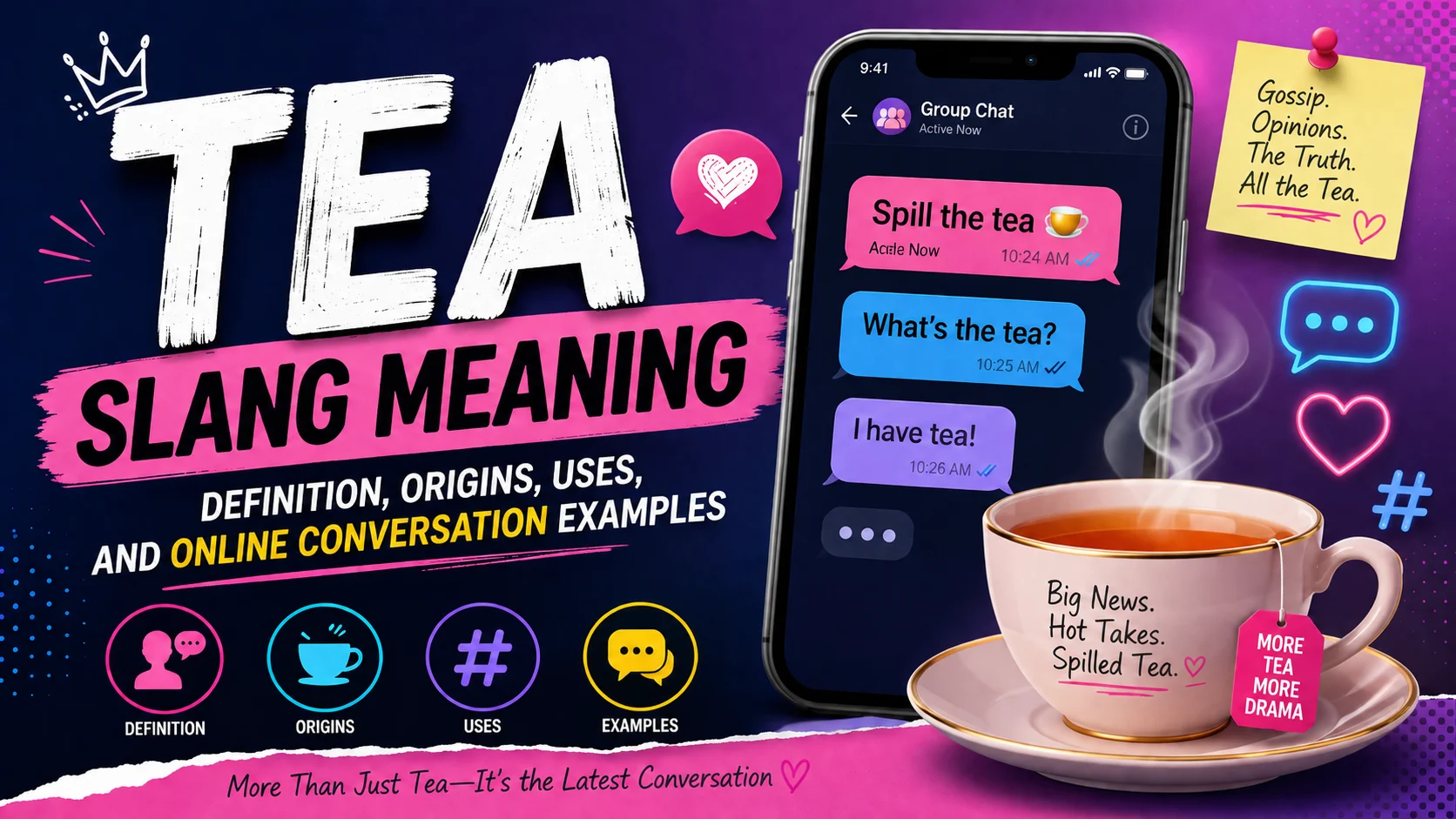
The phrase “tea” has a meaning far beyond the popular drink. In modern slang, especially in online conversations, “tea” refers to gossip, inside information, news, or an interesting piece of information that people want to hear. When someone says “spill the tea,” they are asking another person to share the details or reveal what happened.
People often search for the tea slang meaning because the expression appears frequently on social media platforms, messaging apps, entertainment discussions, and everyday conversations. It has become a common part of internet culture, particularly among younger generations who use short, expressive phrases to communicate.
Understanding this slang helps people follow online conversations, recognize humor, and communicate naturally in digital spaces. Although the word comes from casual speech, its use has expanded into many areas, from friendships and dating conversations to professional discussions about trends and public information.
In slang, “tea” means interesting information, rumors, gossip, or a story that is worth sharing. It is often used when someone has new details about a situation, especially one involving people, relationships, celebrities, or social events.
The expression “spill the tea” means “tell me the details” or “share the information.” For example, if a friend says, “I have some tea about yesterday’s meeting,” they usually mean they have something interesting to reveal.
The meaning does not always suggest negative gossip. Sometimes “tea” can simply mean facts, updates, opinions, or exciting news. For example, a person might say, “The tea is that the new movie is amazing,” meaning they are sharing information or a popular opinion.
The word is flexible because its meaning depends on the context. In casual conversations, it can refer to personal stories. In online communities, it may describe discussions about celebrities, influencers, trends, or public events.
Background and Origin
The slang use of “tea” developed from African American Vernacular English (AAVE) and became popular through drag culture and LGBTQ+ communities. One commonly mentioned connection is the phrase “T,” which historically could refer to “truth.” Over time, “tea” became a playful way to describe revealing information or sharing personal details.
The expression gained wider attention through television, online communities, and social media platforms. As internet culture grew, phrases like “spill the tea” became mainstream and were adopted by people around the world.
Today, tea slang is strongly connected with digital communication. Memes, short videos, and influencer culture helped spread the phrase beyond its original communities. It is now recognized internationally as a casual expression used in English-language conversations.
Although the slang version is modern, the popularity of the word shows how language changes through communities, entertainment, and online interaction.
Usage in Different Contexts (Chat, Social Media, Professional Fields)
The use of “tea” changes depending on where it appears. In private chats, friends may use it to discuss personal experiences, relationship updates, or surprising events. In social media spaces, it is often used to attract attention and encourage discussion.
On platforms where trends spread quickly, users may write phrases like “Here’s the tea” before explaining an opinion, review, or story. Content creators often use the term because it creates curiosity and encourages viewers to continue reading or watching.
In professional fields, the slang is less common but may appear informally. For example, employees might jokingly discuss workplace updates among colleagues using the word. However, formal business communication usually avoids slang expressions because they may sound too casual.
The popularity of “tea” demonstrates how informal internet language can move between personal conversations, entertainment spaces, and everyday speech.
Meaning in Chat, WhatsApp, Instagram, and TikTok
In messaging apps such as WhatsApp, “tea” usually means someone has an interesting story or update. A person might send, “What’s the tea?” to ask for news or details.
On Instagram and TikTok, the phrase is often connected with trends, celebrity discussions, and viral topics. Common examples include:
- “Spill the tea” — share the details.
- “The tea is…” — the information is…
- “No tea, no shade” — no gossip or insult intended.
- “That’s the tea” — that is the final truth or conclusion.
TikTok especially helped popularize tea-related expressions because short videos often focus on storytelling, reactions, and commentary. Users may describe events, reviews, or opinions while presenting them as “tea.”
The meaning remains casual and depends heavily on tone. It can be humorous, dramatic, supportive, or simply a way to make a conversation more engaging.
Meaning in Physics, Medical, and Aircraft Terminology
Outside slang, “tea” can have completely different meanings in technical fields. These meanings are unrelated to online expressions.
In physics, “tea” may appear as an abbreviation or notation in specific contexts, but it is not a widely recognized universal physics term. Scientific meanings usually depend on the subject area, research paper, or specific notation being used.
In medicine, “TEA” is commonly used as an abbreviation for different medical terms. For example, it can refer to procedures or conditions depending on the healthcare specialty. Medical abbreviations should always be interpreted within their clinical context because the same letters may represent different terms.
In aviation and aircraft terminology, “TEA” can also appear as an abbreviation connected to technical systems, organizations, or procedures. Aviation language relies heavily on standardized abbreviations, so the exact meaning depends on the manual or communication system where it appears.
Therefore, the slang meaning of tea should not be confused with technical abbreviations that use the same letters.
Common Misconceptions
A common misunderstanding is that “tea” always means harmful gossip. While it can involve rumors, the slang is broader than that. It can simply mean information, updates, or an interesting story.
Another misconception is that the phrase is only used by young people. Although it became especially popular among younger internet users, many people now understand and use the expression casually.
Some people also confuse “tea” with “truth.” While there is a historical connection between “T” and truth in discussions of slang origins, modern usage usually focuses on sharing information rather than making a statement about absolute facts.
The meaning also changes depending on tone. Saying “spill the tea” among friends is usually playful, while using gossip to harm someone’s reputation is a different situation entirely.
Similar Terms and Alternatives
Several expressions have meanings similar to tea slang. These include:
- Gossip — informal talk about other people, often personal information.
- Scoop — exclusive or interesting news.
- Inside information — details known by a limited group.
- Update — new information about a situation.
- News — general information about recent events.
- Rumor — unconfirmed information.
“Tea” is usually more casual and social than these alternatives. A journalist may look for a “scoop,” while friends may ask for the “tea.”
The difference is mostly about style and setting. Tea has a playful, internet-friendly feeling that makes conversations sound more relaxed and entertaining.
How to Respond When Someone Says “Tea”
The best response depends on the situation. If someone asks, “What’s the tea?” and you want to share information, you can explain the story or update.
Examples of casual responses include:
- “Okay, here’s what happened…”
- “The latest news is…”
- “You won’t believe this, but…”
If you do not want to share details, you can politely avoid the conversation by saying you do not know or prefer not to discuss it.
When someone says “That’s the tea,” they usually mean they believe they have provided the final detail or conclusion. A simple response could be agreement, a reaction, or a question for more context.
Differences from Similar Words
Although “tea,” “gossip,” and “rumor” are related, they are not identical.
Gossip usually involves talking about other people, especially personal matters. A rumor is information that may not be confirmed. Tea can include gossip or rumors, but it can also refer to harmless updates and interesting facts.
“Scoop” often suggests exclusive news, especially in journalism. “Tea” is more conversational and informal.
The main difference is tone. Tea is usually playful, social, and connected to modern online culture, while other terms may sound more serious or negative.
Relevance in Online Conversations and Dating Apps
Tea slang has become especially relevant in online conversations because digital communication often depends on short expressions that quickly show emotion or interest.
On dating apps, people may use “tea” when discussing past relationships, funny experiences, or dating stories. Asking someone for “the tea” can be a playful way to encourage conversation and learn more about their personality.
However, users should be careful when sharing personal information about others. Online discussions can spread quickly, and private details should be handled respectfully.
The popularity of tea slang shows how internet language influences modern communication. A single word can create a sense of curiosity, humor, and connection between people.
Conclusion
The tea slang meaning represents a modern way of describing information, gossip, stories, or interesting updates. What began as a phrase connected to specific communities has grown into a widely recognized expression used across social media, messaging apps, and everyday conversations.
Whether someone asks for the tea, tells others to spill the tea, or says “that’s the tea,” the phrase usually signals a desire for details or a statement that something interesting has been revealed.
Although the word has technical meanings in fields such as medicine, physics, and aviation, the slang version belongs mainly to casual communication. Understanding this expression helps people better navigate online conversations and recognize how language continues to evolve with culture and technology.
Gas Slang Meaning: What It Means in Chat, TikTok, Instagram, Music, and Everyday Conversations

I am a professional content writer with a passion for English grammar, slang, vocabulary, and everyday language. I specialize in creating clear, engaging, and easy-to-understand articles about grammar rules, slang meanings, phrases, expressions, and modern English usage. My goal is to help readers understand language better, communicate naturally, and use English with confidence.