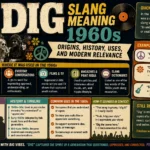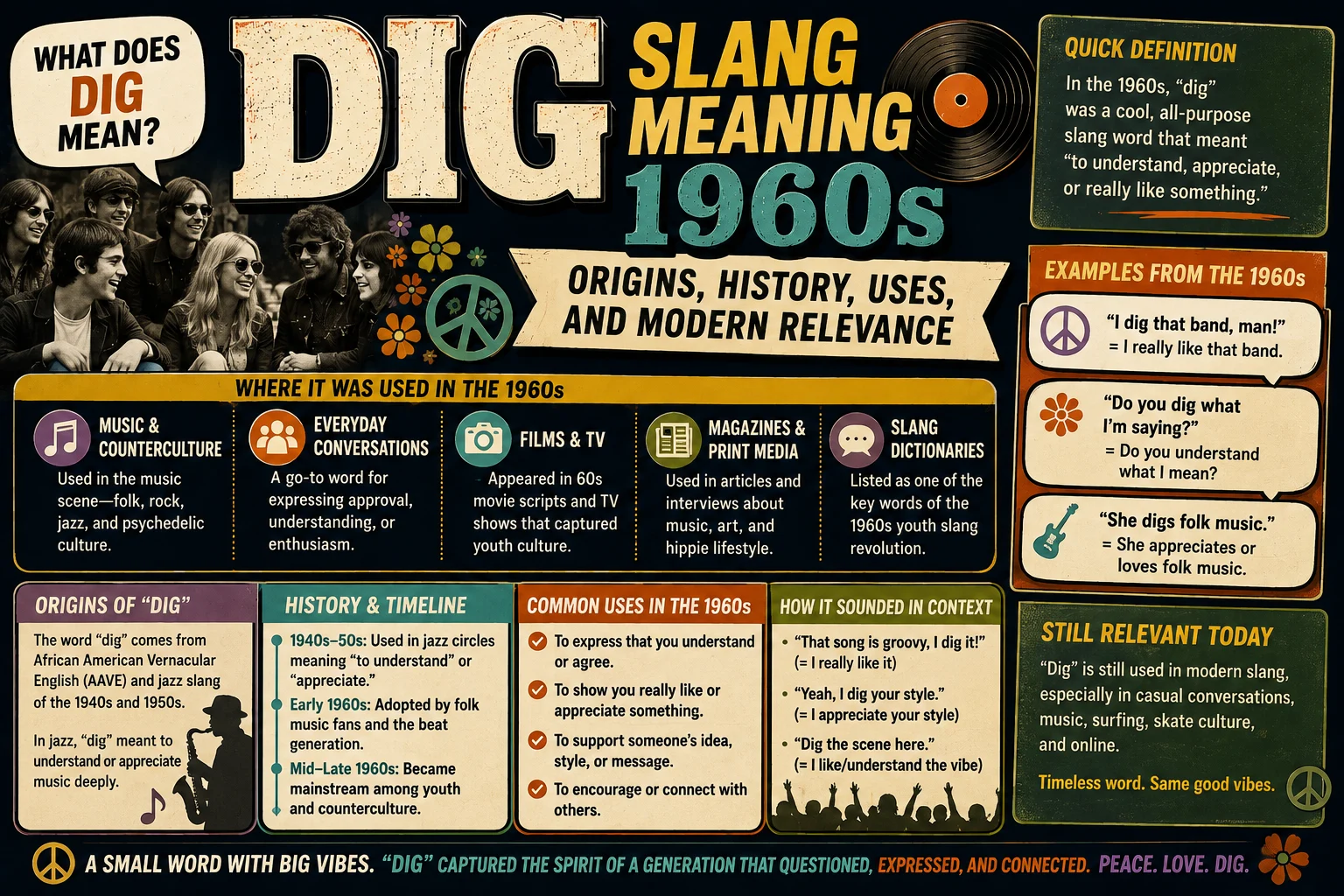
The phrase “dig” became one of the most recognizable slang expressions of the 1960s, symbolizing understanding, appreciation, and cultural awareness. Today, many people search for dig slang meaning 1960s because they encounter the word in classic movies, old songs, books, television shows, or conversations about the hippie movement and counterculture. While the word “dig” has existed in English for centuries as a verb meaning to excavate or dig into the ground, its slang usage took on a completely different meaning during the mid-20th century.
In the 1960s, saying “I dig it” or asking “Do you dig?” meant much more than simply understanding something. It often expressed admiration, agreement, or emotional connection. Even though the expression isn’t as common today, it still appears in pop culture, music, vintage fashion, and nostalgic conversations. Understanding its historical background helps explain why it became such an iconic part of American slang and why it continues to appear in modern media.
Meaning & Definition
The dig slang meaning 1960s refers to the informal use of the word “dig” as a way of saying:
- I understand.
- I appreciate it.
- I enjoy it.
- I like it.
- I completely get what you mean.
Instead of talking about physically digging into the ground, people used “dig” to express mental or emotional understanding.
Examples
- “I really dig your style.”
- “Do you dig what I’m saying?”
- “I dig this music.”
- “I can dig that.”
The phrase often suggested a deeper level of appreciation than simply saying “I like it.”
Someone saying:
“I dig jazz.”
was expressing genuine admiration rather than casual interest.
Similarly,
“Do you dig?”
meant:
- Do you understand?
- Are you with me?
- Does that make sense?
The slang was friendly, relaxed, and heavily associated with youth culture.
Background
Although many people associate “dig” with the 1960s, its slang origins actually go back several decades.
The expression became popular within African American jazz communities during the 1930s and 1940s. Musicians used “dig” to describe understanding music, appreciating talent, or recognizing artistic expression.
During the Beat Generation of the 1950s, writers and artists helped spread the term beyond jazz circles.
By the 1960s, the word exploded into mainstream American culture thanks to:
- Rock music
- Folk music
- Hippie culture
- Television
- Radio
- College campuses
- Anti-war movements
Famous musicians and performers frequently used “dig” during interviews and performances.
The expression fit perfectly with the relaxed language of the era, alongside words like:
- Groovy
- Far out
- Cool
- Right on
- Peace
- Man
The popularity of these expressions reflected the social and cultural changes of the decade.
Usage in Different Contexts (Chat, Social Media, Professional Fields)
Although “dig” originated as 1960s slang, it still appears in several modern settings.
Casual Conversations
People may still say:
- “I dig your idea.”
- “I totally dig that.”
- “I can dig it.”
These uses simply mean they like or understand something.
Social Media
On platforms like Facebook, X, Reddit, or Instagram, “dig” often appears humorously or nostalgically.
Examples:
- “I really dig this vintage outfit.”
- “Anyone else dig classic rock?”
The word adds a retro or laid-back tone.
Professional Settings
In formal workplaces, “dig” is generally avoided because it sounds informal.
Instead, professionals usually say:
- I understand.
- I appreciate your perspective.
- That makes sense.
- I agree.
However, creative industries such as music, design, advertising, and entertainment sometimes use “dig” casually to maintain a relaxed atmosphere.
Meaning in Chat, WhatsApp, Instagram, TikTok
Online messaging has given older slang new life.
A friend might write:
“I dig your new profile picture.”
Meaning:
“I really like it.”
Users often comment:
- “Love this!”
- “I dig this vibe.”
This expresses appreciation for someone’s aesthetic.
TikTok
Creators sometimes use “dig” when discussing retro fashion, vintage music, or old-school culture.
Examples:
- “If you dig 70s fashion, follow me.”
- “You’ll dig this recipe.”
Chat
In everyday messaging:
Person A:
“I finally watched that movie.”
Person B:
“Did you dig it?”
Meaning:
“Did you enjoy it?”
The word feels friendly and conversational rather than old-fashioned.
Meaning in Physics, Medical, and Aircraft Terminology
Unlike its slang meaning, “dig” has little technical significance in these fields.
Physics
There is no standard scientific term called “dig.”
Scientists use the ordinary verb “dig” only when discussing excavation or geological work.
Medical
Doctors do not use “dig” as medical terminology.
However, people sometimes mistakenly confuse it with abbreviations such as:
- DIG
- Digoxin
- Digital examination
These are unrelated to 1960s slang.
Aircraft
In aviation, “dig” is not an official technical term.
Pilots may use the normal English verb when discussing ground operations, but it has no recognized aviation definition related to the slang meaning.
Therefore, whenever someone searches dig slang meaning 1960s, they are almost always referring to the cultural expression—not technical language.
Common Misconceptions
Several misunderstandings surround the word “dig.”
Misconception 1
It always means digging dirt.
Reality: The slang refers to understanding or appreciating something.
Misconception 2
Only hippies used it.
Reality: Jazz musicians and Beat writers were using it long before the hippie movement.
Misconception 3
It is obsolete.
Reality: While less common, it still appears in music, films, online conversations, and retro-themed content.
Misconception 4
It only means “understand.”
Reality: Depending on context, it can also mean:
- Like
- Appreciate
- Respect
- Enjoy
- Recognize
Similar Terms & Alternatives
Several modern expressions carry meanings similar to “dig.”
| 1960s Slang | Modern Equivalent |
|---|---|
| Dig | Like |
| Dig it | Love it |
| Can you dig? | Do you understand? |
| I dig you | I like you |
| Dig this | Check this out |
| Far out | Amazing |
| Groovy | Cool |
| Right on | Exactly |
The best alternative depends on the situation and audience.
How to Respond to It
If someone says:
“I dig your music.”
You could reply:
- Thanks!
- I’m glad you like it.
- I appreciate that.
- Happy to hear it!
If someone asks:
“Do you dig?”
Possible responses include:
- Absolutely.
- Yeah, I get it.
- I understand.
- Totally.
If someone says:
“I dig you.”
Depending on the relationship, you might answer:
- That’s nice of you.
- I like you too.
- Thanks!
Differences from Similar Words
Although “dig” shares similarities with several expressions, there are subtle differences.
Dig vs Like
“Like” is more general.
“I dig it” usually implies stronger enthusiasm.
Dig vs Understand
“I understand” refers to comprehension.
“I dig it” can include emotional appreciation.
Dig vs Love
“Love” expresses stronger emotion.
“Dig” is more casual.
Dig vs Appreciate
“Appreciate” sounds more formal.
“Dig” is relaxed and conversational.
Because of these nuances, “dig” often feels warmer and more expressive than simply saying “I understand.”
Relevance in Online Conversations & Dating Apps
Even decades after its peak popularity, “dig” still appears online.
Dating Apps
Someone might write:
- “Looking for someone who digs live music.”
- “If you dig hiking, we’ll get along.”
This simply means they enjoy or appreciate those activities.
Online Communities
Retro groups, music fans, and vintage enthusiasts regularly use “dig.”
Examples include:
- “Anyone else dig vinyl records?”
- “I still dig old horror movies.”
Memes
The word also appears in memes referencing the 1960s and 1970s.
Using “dig” today often adds personality, humor, or a nostalgic touch rather than sounding outdated.
Conclusion
The dig slang meaning 1960s represents far more than a trendy expression from a bygone era. It reflects a unique period in American culture when music, art, youth movements, and changing social values shaped everyday language. While the literal meaning of “dig” remains tied to excavation, its slang usage evolved to express understanding, appreciation, admiration, and agreement. From jazz musicians and Beat writers to hippies and rock fans, generations embraced the word as a symbol of connection and authenticity. Today, it continues to surface in films, music, social media, and casual conversations, often with a nostalgic or playful tone. Whether someone says “I dig it,” “I dig your style,” or “Can you dig?”, the intended message is usually one of enthusiasm or understanding. Knowing the history and modern usage of this classic expression helps you recognize its meaning wherever it appears and appreciate its lasting influence on English slang.
Lit Slang Meaning: What Does “Lit” Mean in Modern Conversations and Online Culture?

I am a professional content writer with a passion for English grammar, slang, vocabulary, and everyday language. I specialize in creating clear, engaging, and easy-to-understand articles about grammar rules, slang meanings, phrases, expressions, and modern English usage. My goal is to help readers understand language better, communicate naturally, and use English with confidence.