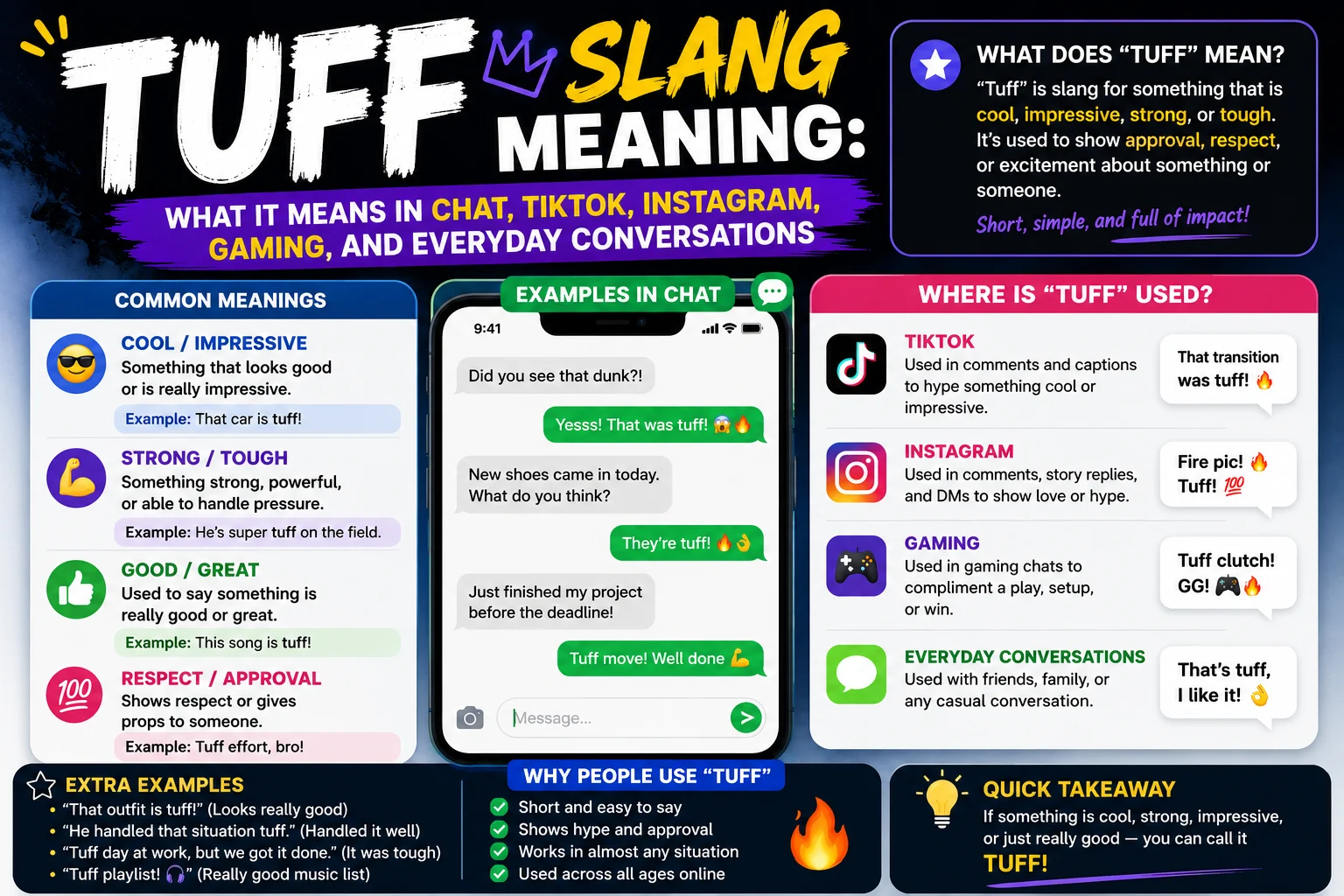
If you’ve been browsing TikTok, Instagram, Snapchat, X (formerly Twitter), or reading text messages from friends, you’ve probably seen someone comment “Tuff 🔥” or say “That’s tuff.” At first glance, it may seem like a misspelling of the word “tough,” but the tuff slang meaning is quite different in modern internet culture. Depending on the context, “tuff” is usually a compliment that means something is cool, impressive, stylish, or exceptionally good. In other situations, especially when someone says “that’s tough,” it can express sympathy for an unfortunate situation.
People search for this slang because it’s widely used in social media comments, gaming communities, music discussions, and viral videos. Since the spelling and meaning can be confusing, understanding the context is essential.
This guide explains what “tuff” means in slang, where it came from, how it’s used across different platforms, its meanings in technical fields, common misconceptions, similar expressions, and the best ways to respond naturally.
Meaning & Definition
The most common tuff slang meaning is:
Tuff = Cool, impressive, stylish, high-quality, or deserving of admiration.
Unlike the standard English word “tough,” which often refers to something difficult or strong, “tuff” is primarily used as a compliment.
Examples
Example 1
Those sneakers are tuff.
Meaning:
The sneakers look amazing.
Example 2
Your new car is tuff.
Meaning:
Your car is really impressive.
Example 3
That beat is tuff.
Meaning:
The music sounds excellent.
Another Meaning
Sometimes people intentionally write “tuff” instead of “tough” when reacting to an unfortunate situation.
Example:
You failed the exam?
That’s tuff.
In this case, it can mean:
- That’s unfortunate.
- Sorry to hear that.
The intended meaning depends on the conversation and tone.
Background
The slang use of “tuff” developed from the traditional word “tough,” but its meaning gradually shifted within youth culture, hip-hop, sports, and online communities. Instead of describing something difficult or physically strong, “tuff” began to describe things that were visually appealing, impressive, or exciting.
Hip-hop artists, athletes, influencers, and content creators helped popularize the expression. As social media platforms like TikTok, Instagram, Snapchat, and YouTube grew, the word spread rapidly through captions, comments, and memes.
Today, “tuff” is commonly used by Gen Z and younger Millennials as a quick compliment. It appears in discussions about fashion, music, cars, gaming, fitness, and lifestyle content.
Although its spelling differs from “tough,” the two words still share some historical connections, making context important when determining the intended meaning.
Usage in Different Contexts
The meaning of “tuff” changes slightly depending on the situation.
Everyday Conversations
Friends often use it to compliment something.
Example:
Your haircut is tuff.
Meaning:
It looks great.
Music
Fans frequently comment:
This song is tuff.
Meaning:
The song is excellent.
Gaming
Players use “tuff” after impressive gameplay.
Example:
That clutch was tuff.
Meaning:
That play was amazing.
Fashion
“Tuff” is commonly used to praise:
- Sneakers
- Clothing
- Accessories
- Hairstyles
Example:
That jacket is tuff.
Professional Settings
In workplaces, the slang meaning is uncommon. Instead, people generally use words like:
- Impressive
- Excellent
- High-quality
- Outstanding
Meaning in Chat, WhatsApp, Instagram, TikTok
“Tuff” is especially popular on social media.
Chat & Text Messages
Friends may text:
That’s tuff.
Depending on context, this may mean:
- That’s awesome.
- That’s unfortunate.
Used casually after someone shares:
- New photos
- Achievements
- Funny stories
Very common in comments.
Examples:
- Tuff 🔥
- So tuff.
- That’s tuff.
Usually complimenting:
- Fashion
- Cars
- Photography
- Fitness
TikTok
TikTok creators frequently use:
- Tuff.
- Tuff af.
- That’s tuff.
The word often appears in dance, sports, music, and comedy videos.
Snapchat
Friends commonly respond:
Tuff.
after seeing an impressive story or selfie.
Meaning in Physics, Medical, and Aircraft Terminology
Outside internet slang, “tuff” has completely different meanings.
Geology
In geology, tuff is a type of rock formed from compacted volcanic ash after an eruption. This is the primary scientific meaning of the word.
Example:
The canyon walls contain layers of volcanic tuff.
Physics
Physics itself does not use “tuff” as a standard technical term. However, researchers studying volcanic materials may refer to tuff rock because of its geological properties.
Medical Field
“Tuff” has no recognized medical abbreviation or official medical meaning.
Aviation
“Tuff” is not an aviation term. Any appearance in aviation would typically relate to the geological material rather than slang.
Common Misconceptions
Several myths surround this expression.
Misconception 1
Tuff is simply a misspelling of tough.
Not in slang.
Today, “tuff” often carries its own positive meaning.
Misconception 2
It always means something is difficult.
Modern slang usually means something is impressive or stylish.
Misconception 3
It’s always a compliment.
Sometimes “that’s tuff” expresses sympathy for bad news instead.
Misconception 4
Everyone understands the slang.
Older generations may assume it’s simply a spelling mistake.
Similar Terms & Alternatives
Several slang expressions have similar meanings.
| Term | Meaning |
|---|---|
| Tuff | Cool or impressive |
| Fire | Excellent |
| Gas | Amazing |
| Hard | Very impressive |
| Clean | Stylish |
| Sick | Really cool |
| Dope | Excellent |
| Heat | High-quality |
These expressions are especially common in music, fashion, and sports communities.
How to Respond to It
If someone says:
Your outfit is tuff.
You can reply:
- Thank you!
- I appreciate it!
- Glad you like it.
- Thanks so much!
If someone says:
That’s tuff.
after hearing bad news, they usually mean:
“I’m sorry that happened.”
You can respond:
- Thanks.
- I appreciate it.
- Hopefully things improve.
Differences from Similar Words
“Tuff” is often confused with several similar words.
| Term | Meaning |
|---|---|
| Tuff | Cool or impressive (slang) |
| Tough | Difficult or strong |
| Fire | Excellent |
| Gas | Amazing |
| Hard | Impressive |
| Clean | Stylish |
| Sick | Really cool |
| Heat | Outstanding |
The biggest difference is that tuff is usually a compliment, while tough often describes difficulty or strength.
Relevance in Online Conversations & Dating Apps
“Tuff” has become a popular internet compliment because it’s short, expressive, and easy to use. On TikTok, Instagram, Snapchat, Discord, and Reddit, users frequently comment “tuff” under fashion posts, music clips, workout videos, sports highlights, and gaming moments to show admiration.
On dating apps, someone might describe a person’s outfit, photos, or style as “tuff” to express attraction or appreciation in a casual, modern way. The slang creates a relaxed and friendly tone, making conversations feel more natural among younger users.
Learning this expression helps you better understand compliments in today’s online culture and recognize when someone is praising you or simply reacting sympathetically to a difficult situation.
Conclusion
The tuff slang meaning has evolved into a modern compliment used to describe something stylish, impressive, exciting, or exceptionally good. Whether someone says your outfit is “tuff,” a song is “tuff,” or a basketball play was “tuff,” they’re usually expressing admiration. In some situations, however, “that’s tuff” can also convey sympathy after hearing unfortunate news.
Outside internet culture, tuff is a legitimate geological term referring to volcanic rock, making it important to consider the context before interpreting the word. Understanding both its slang and scientific meanings allows you to follow conversations across social media, messaging apps, and educational settings with confidence.
As internet language continues to evolve, “tuff” remains one of the most popular compliments in music, fashion, sports, gaming, and everyday online communication.
NPC Slang Meaning: What It Means in Chat, TikTok, Instagram, Gaming, and Everyday Conversations

I am a professional content writer with a passion for English grammar, slang, vocabulary, and everyday language. I specialize in creating clear, engaging, and easy-to-understand articles about grammar rules, slang meanings, phrases, expressions, and modern English usage. My goal is to help readers understand language better, communicate naturally, and use English with confidence.